

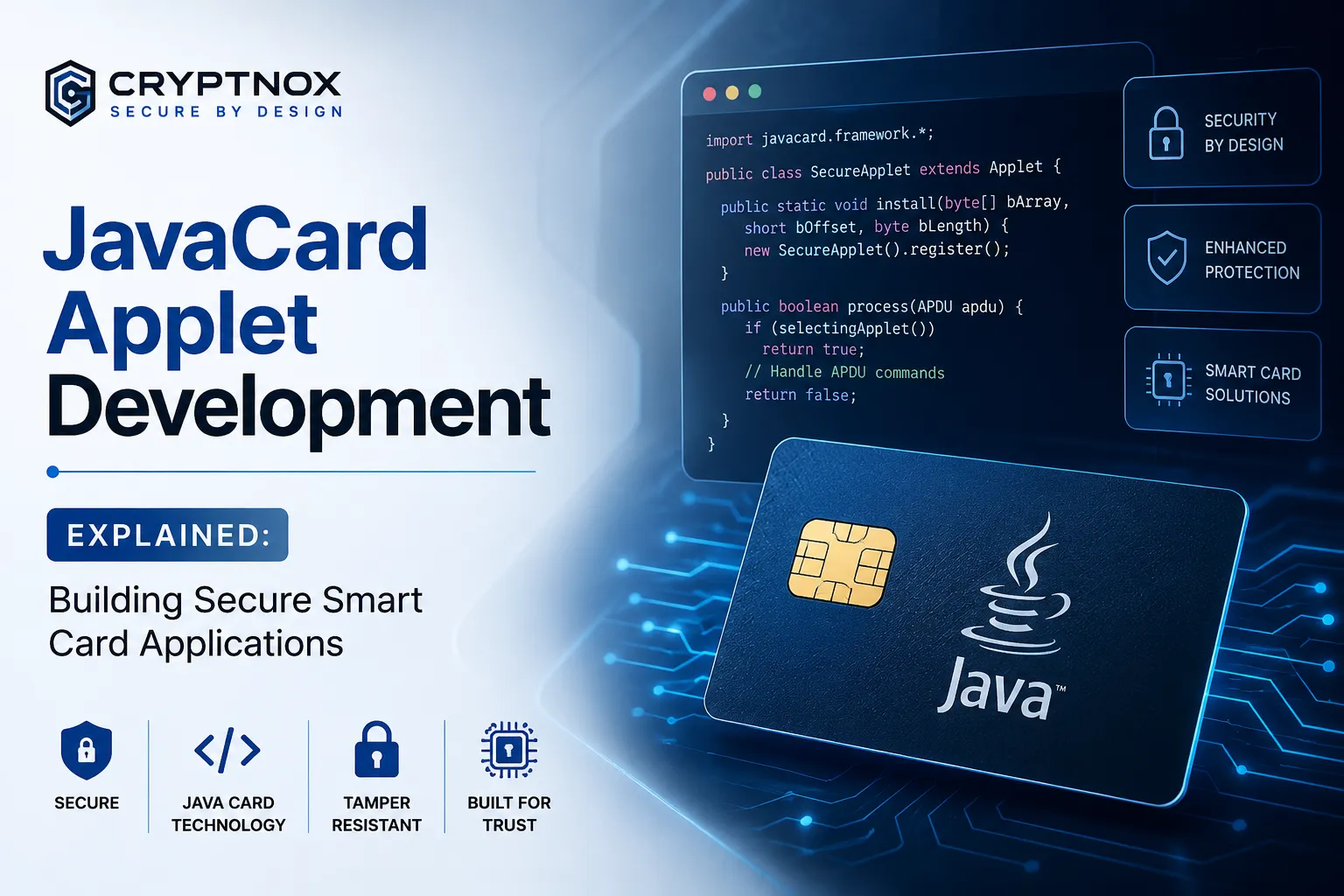
As organizations adopt stronger authentication methods, digital identity solutions, and secure hardware technologies, smart cards continue to play a central role in protecting sensitive information. At the heart of many modern smart cards lies JavaCard technology, a secure platform that allows developers to build portable, cryptographic applications capable of running directly on smart cards. From financial services and enterprise authentication to digital identity and blockchain wallets, JavaCard applets enable highly secure and flexible solutions for a wide range of industries.
Understanding JavaCard applet development is essential for businesses looking to build customized smart card applications. Whether developing secure authentication systems, payment solutions, or hardware-based digital identity platforms, JavaCard provides the flexibility and security required for modern embedded applications.
What Is JavaCard Applet Development?
JavaCard is a specialized version of the Java platform designed for secure elements such as smart cards, SIM cards, and embedded security devices. Instead of running traditional desktop applications, JavaCard executes lightweight applets that perform secure cryptographic operations directly within the card.
These applets can support functions such as:
-
Secure authentication
-
Digital signatures
-
Public Key Infrastructure (PKI)
-
Secure credential storage
-
Blockchain wallet applications
-
Enterprise identity management
Modern JavaCard applet development enables organizations to create highly customized solutions without exposing sensitive cryptographic material outside the secure hardware.
Why JavaCard Is Trusted for Secure Applications
One of JavaCard’s greatest strengths is its security-focused architecture. Applets execute within a protected environment that isolates sensitive operations from external systems.
This approach provides several advantages:
-
Secure execution of cryptographic functions
-
Protection against unauthorized access
-
Controlled application lifecycle management
-
Multi-application support
-
Standardized development environment
Because JavaCard has become an industry standard, developers can build interoperable applications that support multiple enterprise use cases while maintaining strong security.
Common Applications of JavaCard Applets
JavaCard technology is used across numerous industries where hardware-based security is critical.
Typical implementations include:
Enterprise Authentication
Organizations deploy JavaCard applets to enable passwordless authentication, secure employee credentials, and digital certificates.
Financial Services
Banks use JavaCard applications for payment cards, secure authentication, and cryptographic transaction verification.
Government Identity Programs
Government agencies leverage JavaCard technology for secure identity cards, digital certificates, and controlled access systems.
Blockchain Wallets
JavaCard also supports hardware wallet applications capable of securely managing cryptographic keys and digital assets.
The flexibility of JavaCard makes it one of the most versatile secure application platforms available today.
The Role of Secure Element Development
Every JavaCard application relies on secure hardware capable of protecting sensitive information from both physical and software-based attacks.
A robust secure element development process ensures that cryptographic keys remain isolated inside tamper-resistant hardware throughout the application’s lifecycle.
Secure elements provide:
-
Hardware-based key protection
-
Cryptographic acceleration
-
Tamper resistance
-
Secure data storage
-
Protected execution environments
By combining JavaCard software with secure element technology, organizations can build applications that meet demanding enterprise security requirements.
Benefits of Custom Smart Card Development
Every organization has unique authentication, identity, and security requirements. Off-the-shelf smart cards may not provide the flexibility needed for specialized applications.
Through Cryptnox custom smart card development, businesses can create tailored smart card solutions that integrate seamlessly with their existing infrastructure.
Custom development enables organizations to:
-
Implement proprietary authentication workflows
-
Integrate with enterprise identity platforms
-
Support specialized cryptographic algorithms
-
Build custom wallet applications
-
Develop secure enterprise credentials
This flexibility allows businesses to create solutions specifically aligned with their operational and regulatory requirements.
JavaCard Development Lifecycle
Building a secure JavaCard application typically follows a structured development process.
Key stages include:
-
Requirements analysis
-
Application architecture
-
JavaCard applet development
-
Secure element integration
-
Functional testing
-
Security validation
-
Deployment and lifecycle management
Each stage contributes to the overall security and reliability of the final solution.
Careful planning during development helps minimize vulnerabilities while improving long-term maintainability.
Why Smart Card Consultancy Matters
Developing secure smart card applications requires expertise in embedded systems, cryptography, hardware security, and industry standards.
Organizations often benefit from experienced smart card consultants who understand secure application design, certification processes, and deployment best practices.
Professional consultancy helps businesses:
-
Reduce development risks
-
Accelerate implementation
-
Improve application security
-
Optimize hardware selection
-
Ensure scalable architecture
Working with experienced development partners allows organizations to focus on business objectives while leveraging proven technical expertise.
Real-World Enterprise Applications
JavaCard technology supports numerous enterprise solutions across multiple sectors.
Examples include:
-
Employee authentication cards
-
Secure developer credentials
-
Healthcare identity cards
-
Financial payment applications
-
Government identity programs
-
Blockchain hardware wallets
-
Enterprise PKI solutions
Many successful deployments demonstrate how customized smart card applications improve security while simplifying identity management.
Organizations evaluating new implementations can benefit from reviewing case studies that illustrate practical smart card development projects across different industries.
Future of JavaCard Development
As passwordless authentication, digital identity, and hardware security continue evolving, JavaCard remains a foundational technology for secure embedded applications.
Future innovation is expected to focus on:
-
Advanced cryptographic algorithms
-
Digital identity ecosystems
-
Secure blockchain applications
-
Enterprise Zero Trust security
-
IoT device authentication
-
Hardware-based credential management
Its portability, security, and industry adoption ensure JavaCard will continue serving as a trusted platform for next-generation smart card solutions.
Conclusion
JavaCard applet development enables organizations to build highly secure, flexible, and scalable smart card applications for authentication, payments, digital identity, and blockchain solutions. By combining standardized software architecture with hardware-backed security, JavaCard provides an ideal platform for enterprise-grade embedded applications.
Organizations seeking customized smart card solutions can benefit from Cryptnox custom smart card development, secure hardware integration, and proven expertise in JavaCard engineering. Combined with strong secure element development and real-world implementation experience demonstrated through Cryptnox case studies, JavaCard technology continues to power some of the world’s most secure smart card applications.