

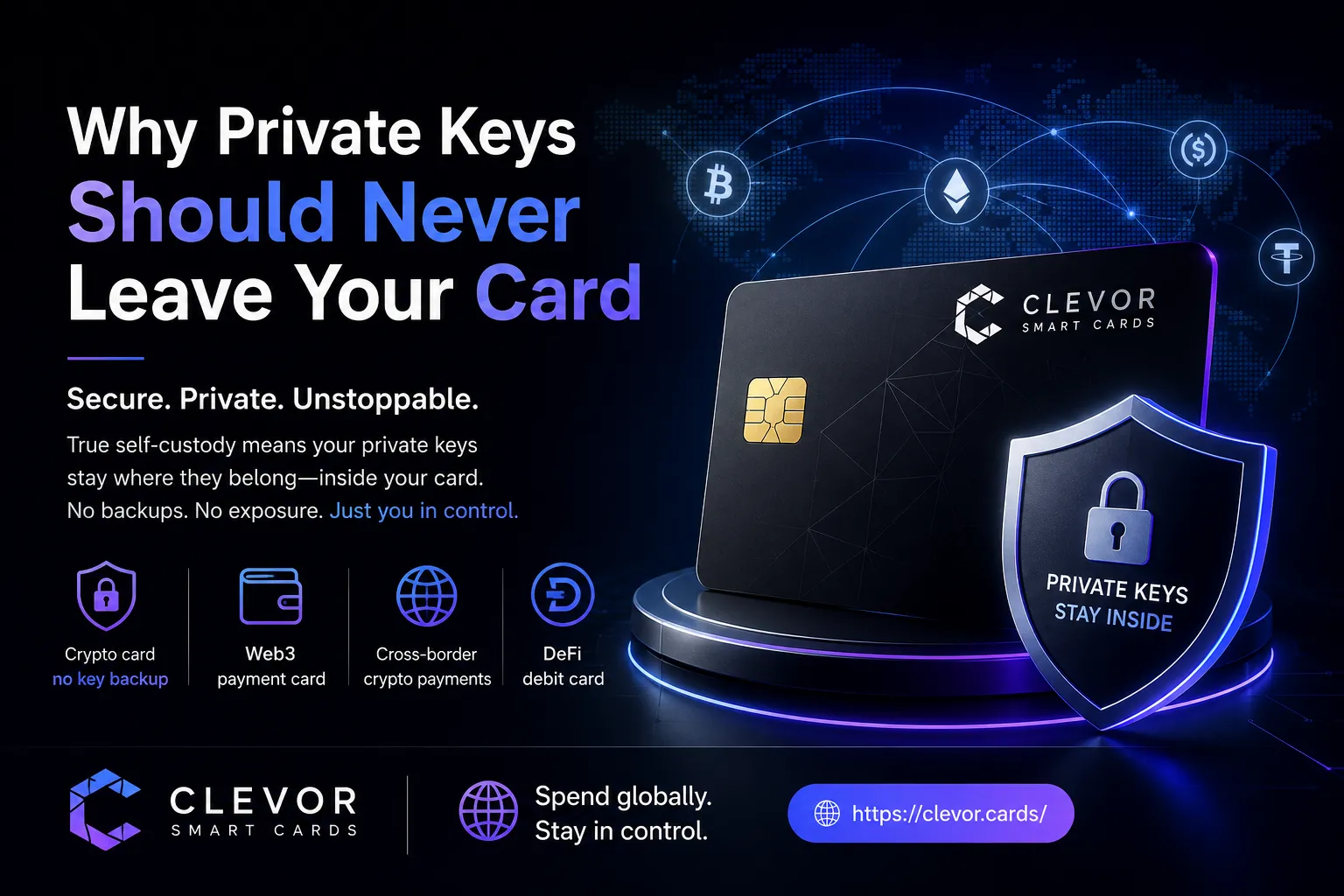
In the world of cryptocurrency, one rule remains constant: whoever controls the private keys controls the assets. Yet millions of users still rely on seed phrase backups, cloud storage, screenshots, or paper wallets to secure their crypto. These methods introduce unnecessary risks that can lead to theft, loss, or unauthorized access.
Modern self-custody is evolving. Instead of exposing private keys through backups and external storage, innovative solutions like a Web3 payment card are redefining how users protect and access digital assets. The idea is simple but powerful: private keys should never leave the secure element of your card.
Understanding the Risk of Traditional Key Backups
For years, crypto users have been instructed to write down recovery phrases and store them somewhere safe. While this approach provides ownership, it also creates vulnerabilities.
Common risks include:
-
Lost or damaged backup phrases
-
Theft of written recovery phrases
-
Malware stealing digital copies
-
Human error when storing sensitive information
-
Unauthorized access by third parties
These challenges have created demand for a crypto card no key backup approach where users maintain ownership without exposing their private keys.
Why Private Keys Should Stay Inside the Card
A secure hardware-based card keeps cryptographic keys isolated from external systems. The keys are generated and stored within the card’s secure element and never exported.
This security model offers several advantages:
Enhanced Protection Against Hacks
When private keys never leave the card, attackers cannot obtain them through malware, phishing attacks, or compromised devices.
True Self-Custody
Users maintain complete control over their assets without depending on centralized exchanges or custodial wallets.
Simplified User Experience
Traditional seed phrase management can be intimidating for new users. A crypto card no key backup model reduces complexity while maintaining security.
Platforms such as Clevor Smart Cards are helping make self-custody more accessible by combining security and usability into a single solution.
The Rise of the Web3 Payment Card
The next generation of crypto spending is being powered by the Web3 payment card. Unlike traditional crypto wallets, these cards allow users to securely manage assets while interacting with decentralized applications and payment networks.
Benefits include:
-
Secure storage of private keys
-
Easy crypto transactions
-
Wallet connectivity
-
Improved portability
-
Strong hardware-based security
Solutions like Clevor Smart Cards demonstrate how hardware-based security can support both everyday transactions and long-term asset protection.
Self-Custody Meets Everyday Spending
As digital assets become more mainstream, users want tools that combine ownership with convenience. This is where a DeFi debit card becomes valuable.
A DeFi-enabled payment card allows users to:
-
Access decentralized finance services
-
Manage multiple digital assets
-
Maintain self-custody
-
Use crypto for everyday purchases
Rather than transferring funds to centralized platforms, users can maintain control while benefiting from real-world utility.
Enabling Secure Cross-Border Crypto Payments
Global transactions remain one of cryptocurrency’s strongest use cases. Traditional international transfers can be slow, expensive, and dependent on multiple intermediaries.
Secure hardware-based solutions are making cross-border crypto payments more practical by providing:
-
Faster transaction settlement
-
Reduced reliance on banks
-
Greater control over funds
-
Improved security for international transfers
With solutions such as Clevor Smart Cards, users can securely participate in the global digital economy without exposing their private keys.
Why the Future Is Keyless Self-Custody
The crypto industry is moving toward security models that eliminate unnecessary exposure of sensitive information. Seed phrases and manual backups may continue to exist, but hardware-secured solutions offer a safer alternative for many users.
A crypto card no key backup approach reduces the risks associated with traditional storage methods while preserving the core principle of cryptocurrency ownership: self-custody.
By combining the security of hardware wallets with the convenience of a Web3 payment card, innovative solutions like Clevor Smart Cards are helping shape the next generation of digital asset security.
Conclusion
Private keys are the foundation of crypto ownership, and every additional copy increases the potential attack surface. Keeping keys securely locked inside a hardware-based card provides stronger protection, simplified user experience, and true self-custody.
As adoption grows, secure solutions that support Web3 payment card functionality, DeFi debit card capabilities, and cross-border crypto payments will become increasingly important. The future of crypto security is clear: private keys should never leave your card.